

Restoration, repair and reproduction
Flag Studio restores, repairs and reproduces flags and banners in the UK, from everyday hoist repairs to historic regimental, Masonic and family flags. Email photos, the flag's size and the damage for a no-obligation quote. Once accepted, please send the flag by recorded delivery and we return it once the work is done.
Typical costs: hoist repair (re-hem, anti-fray, new rope and toggle) from £15 (please see the 'do it yourself' and 'send it in' options HERE; patching from £25; restoration of a historic flag from £199 depending on size and condition. Every job is quoted individually once we have seen the pictures and ideally the flag itself.
FAQs
How do I get a flag repaired or restored?
Email with photos of the damage, the flag's size and what you want done. We send a no-obligation quote. If you accept, you send the flag by recorded delivery with your enquiry reference, and we return it after the work.
Is it possible to extend the length of a battered and faded flag?
Only with new, unfaded fabric, so the old and new sections will look different.
What repairs do you do on flags that fly regularly?
We re-hem the fly end, add anti-fray strip, replace the canvas rope and toggle at the hoist, and patch holes. Patches temporarily strengthen the surrounding fabric and are usually barely visible when the flag flies.
How do I stop rust and iron spots damaging a framed historic flag?
Use museum acrylic instead of glass, mount on acid-free 100% cotton rag matboard, use a spaced shadowbox so the flag never touches the acrylic, and mount without glue, tape or fusing webs. Do not wash or iron the spots.
What if the flag is too damaged to repair?
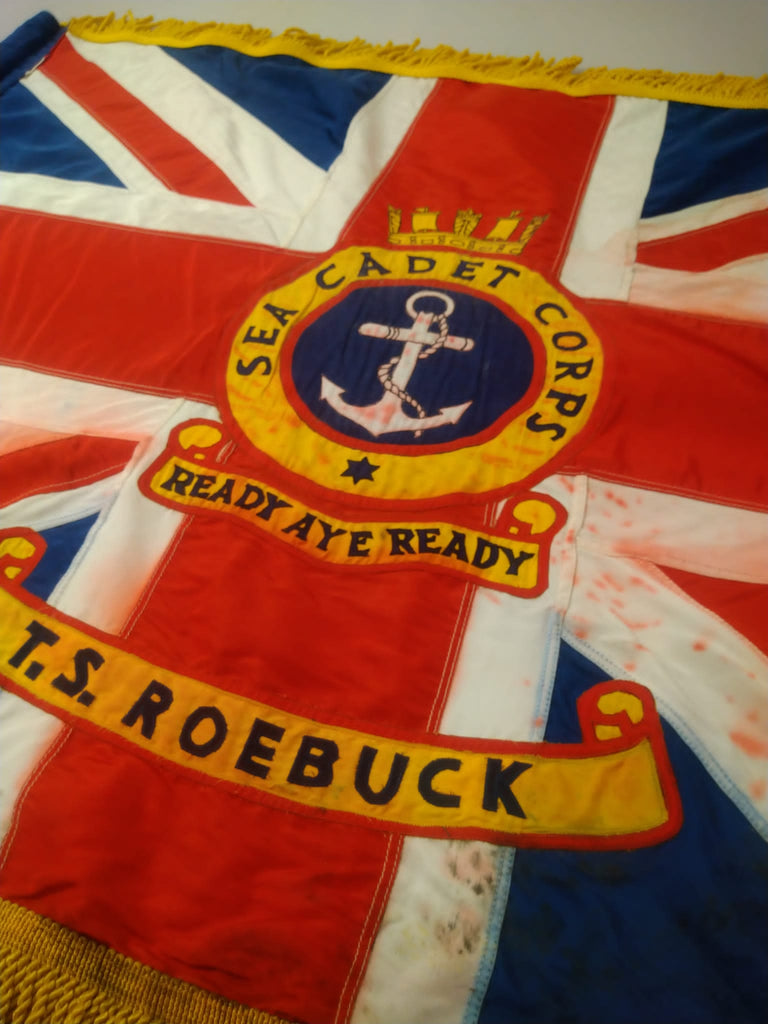
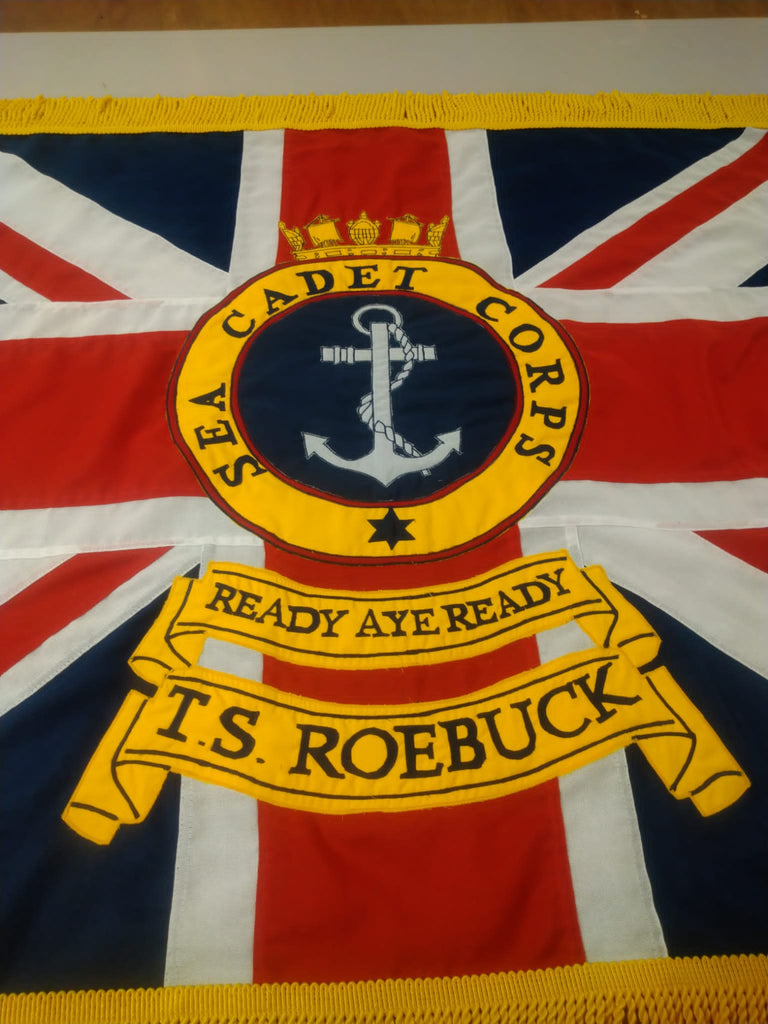
We reproduce it. Past reproductions include a Royal Northumberland Fusiliers banner from a photograph and a water-damaged Cadet ceremonial flag.
Do you restore Masonic, regimental and family flags?
Yes. Examples on this page include a Masonic lodge gonfalon from New Zealand, a Royal Standard, a WWII Japan flag and family pennants.
How long does restoration take and what does it cost?
We ask for a minimum of four weeks so we can plan the work and take our time doing the work. We sometimes source materials and notions from the USA so they take a while to arrive.
Repairing and restoring your flags
There are varying methods of bringing your flag or banner back to as near enough to its former glory as possible and of course reproduction of the original flag is a good alternative option.
Flag repairs
We offer a repair service to the flags you fly regularly which may need to be re-hemmed on the fly end, have a strip of anti-fray added to extend the lifetime of your flag in use or replace the canvas rope and toggle at the hoist.
For this service, please email us on flagstudiodesign@gmail.com with pictures of the damage, the size of your flag and a description of what you'd like us to do.
We will then send you a no obligation quote for review and on acceptance ask you to send the flag to us by recorded delivery with reference to your enquiry and we will do the work and return it to you asap.
Please note that where flags are faded and you would like us to extend for instance the fly end, we will only be able to do so with new fabric which hasn't faded, so there will be visible difference between old and new.
Patching is a way of repairing holes in your flag and whilst not the most attractive repair job it does do a good job of temporarily strengthening and supporting the surrounding fabric and is usually barely visible when the flag is flying.

Flag restoration
Here we show just a few examples of flags we have restored to as much of their former glory as possible without diminishing their originality.

Click HERE to read up on the restoration of this WWII Japan flag.
Iron spots on flag textiles/fabrics - blood and metal
A good amount of historical flags were made using protein based textiles - cotton. silk, linen for example.
Cotton is highly absorbent and easily traps moisture against regular glass, accelerating fabric rot and rust spreading.
When a textile/flag is framed, most textile deterioration can be prevented by making amendments to the frame and
1. Replace standard glass for museum acrylic: replacing regular glass with UV-filtering acrylic which blocks 99% of UV rays and prevents the static electricity that draws dust and loose fibres.
2. Use acid-free matting: ensure the textie is mounted on 100% cotton rag matboard, which neutralises acidity and prevents the "acid burn" that turns cotton brittle and yellow.
3. Consider changing the frame to a spaced frame shadowbox): use spacers to ensure the flag never touches the acrylic. Moisture condenses on the surface of acrylic or glass and direct contact will cause mould to grow right on the blood and iron spots.
4. Mount without glue: secure the textile to the backing using a pressure mount or by hand-stitching it to a washed linen-covered board with fine silk thread. Never use tape, spray adhesives, or iron-on fusing webs.
If you choose to remove the textile from a frame, laying it flat inside an archival storage box lined with unbuffered, acid-free tissue paper is a best practice. Avoid folding the flag as old cotton fibres will crack and break along the crease lines and importantly, keep it away from heat vents, damp walls, and bright rooms.
Attempting to wash or iron the spots from the textile is not recommended. Moisture and DIY cleaning treatments cause further staining and fabric rot. Iron spots happen when metal hardware (grommets, pins, or display materials) oxidises (rusts). Rust slowly degrades and eats through the fabric - fibres and blood contains iron and protein which over time, turns brown and becomes highly acidic, which rots holes into cotton, wool, and silk.
Preserving family history
Before and after cleaning and shisheko restoration; stitching using gold thread in preparation for framing. Flags stitched to unbleached cotton fabric for stability.

and our Client sent us a wonderful picture of one of the flags mounted and framed! - see below

A Royal Standard
Before and after cleaning and shisheko stitch restoration of a Client's flag for their corporate foyer. Stitched to two layers of backing of unbleached cotton fabric using gold thread and hidden linen stitches for stability.


Masonic gonfalon banner, UK

Masonic gonfalon banner, New Zealand
A client from New Zealand sent us their beloved Lodge gonfalon banner for repairs. The remit was to use as much of the original as possible but to reproduce the banner so it would be fit for use for the next 100 or so years.
Below is a picture of the banner as we received it. You'll see that the fabric ground and edges are very frayed and moth eaten and the item is stained and marked overall.

We carefully traced the original for placement and removed each individual letter and element of the banner before re-stitching it by hand to a new ground, adding the original fringing.
Below is a picture of the restored banner.
I have received the banner and I must say that you have done an exceptional repair and I thank you very much. Ken


Flag reproduction
Occasionally the wear and tear on a flag or banner is just too much to restore or repair so we offer a replacement service.
The regiment of the Royal Northumberland Fusiliers


In this instance, the Client sent us pictures of an old gonfalon banner (see below) from which we designed the artwork and reproduced it using a printed cotton lima fabric, which we then lined and added fringe to.
The first image is the picture we were supplied with and the second is the artwork we created using the original picture.

Water damage and reproduction of a Cadet ceremonial flag.