


Bespoke Guidons: The Art and Heritage of Ceremonial Military Flags
A single fraying thread on a ceremonial field isn't just a manufacturing flaw; it's a silent betrayal of a century of regimental honor. When 150 soldiers stand at attention, every eye follows the guidons that lead them. These aren't mere textiles. They're the living pulse of a unit's history, yet many modern units are forced to settle for mass-market replicas that fail within 18 months. You recognize that a flag is more than fabric; it's a sacred trust that demands absolute heraldic precision and a visionary approach to design.
We understand that finding a specialist UK maker who truly masters Commonwealth standards is a significant challenge in 2024. You deserve a partner who values substance over fleeting trends. This guide will help you discover the strategic significance of ceremonial flags and the intricate process of commissioning a hand-sewn masterpiece. We'll examine the heritage of these symbols and outline how to secure a durable, accurate standard that meets strict requirements for 2026 and the decades that follow.
Key Takeaways
- Deepen your understanding of the heraldic language and historical roots that define a unit's identity through its ceremonial standards.
- Evaluate the tactile superiority of hand-sewn appliqué over digital alternatives to ensure your guidons command the respect they deserve in high-stakes environments.
- Navigate the strategic commissioning process, from defining complex symbology to selecting the technical materials that will endure for generations.
- Discover how human-centric craftsmanship and a visionary approach to design can elevate your regimental heritage into a tangible masterpiece.
- Gain insight into the meticulous standards of UK-based production that bridge the gap between traditional art and modern strategic impact.
What is a Guidon? Defining the Symbol of Unit Identity
A guidon is the soul of a unit. It represents a deep-seated commitment to identity, acting as a visual North Star for company-sized formations. Derived from the 16th-century French "guydomme" or "guide-homme," the term literally translates to "guide-man." This historical anchor highlights its primary function: to serve as a steadying point for troops during the chaos of movement. While regimental colours embody the spirit of an entire battalion, the guidon is an intimate, tactical symbol for the immediate troop or company. It carries a heavy emotional weight, serving as the rallying point where soldiers find their place in the line.
The distinction between these markers is precise. A standard is typically larger and reserved for higher-echelon cavalry or armored units; regimental colours are the heavy, ceremonial hearts of infantry battalions. In the Guidon (United States) tradition, these flags are essential for alignment and morale, bridging the gap between functional utility and sacred heritage. They aren't merely fabric. They're a strategic craft that elevates a group of individuals into a singular, visionary force.
The Iconic Swallow-tail Design
The swallow-tail shape defines the guidon. This bifurcated fly creates a sharp, aggressive aesthetic that cuts through the air. It historically separated cavalry and yeomanry from the rectangular colours used by infantry. Most modern specifications, particularly those influenced by 19th-century cavalry traditions, feature a 10-inch indent at the fly. This design choice isn't purely decorative. It reduces wind drag during high-speed mounted maneuvers, ensuring the unit's designation remains visible even at a gallop. These guidons vary in dimension across branches, but the swallow-tail remains the universal hallmark of the mobile vanguard.
Guidons in British and Commonwealth Traditions
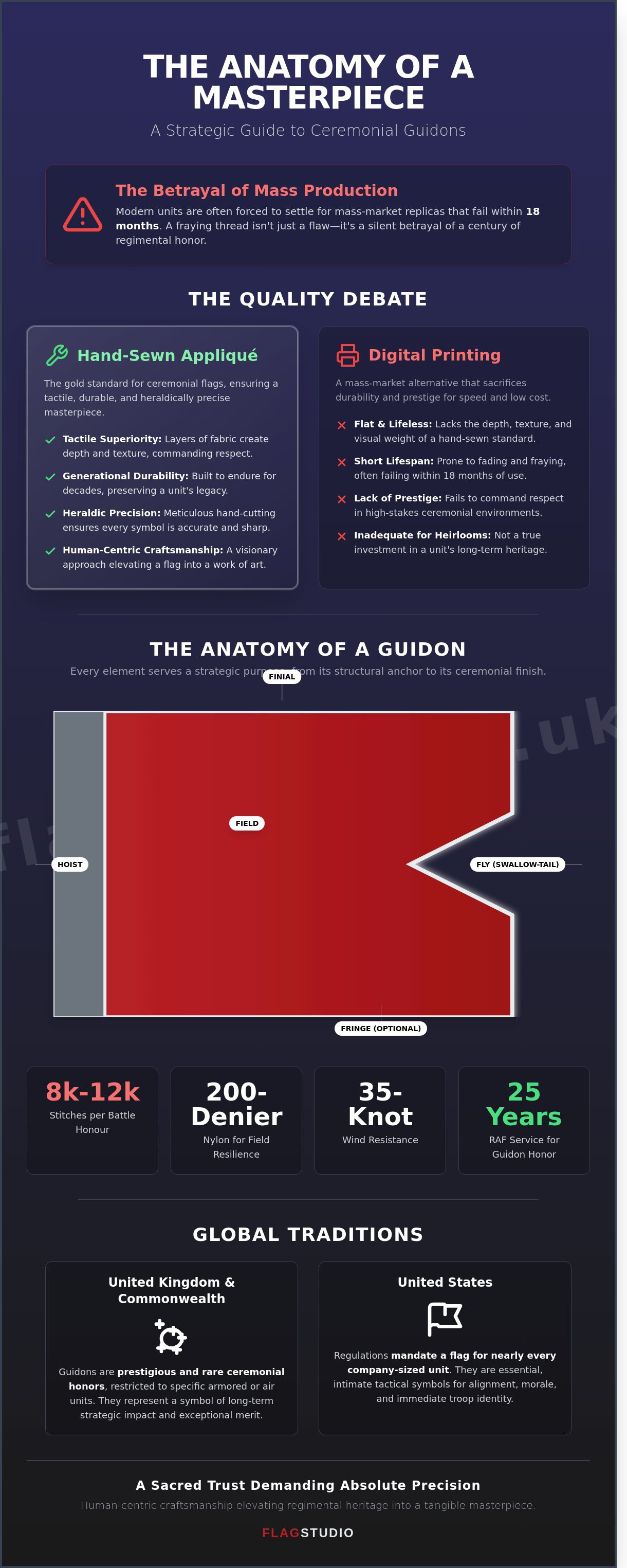
British traditions offer a different narrative arc. In the Royal Armoured Corps and the RAF, guidons are prestigious ceremonial honors. They evolved from medieval pennons first recorded around 1066, gradually gaining status until they became formal markers of unit history. Unlike US regulations that mandate a flag for nearly every company, the UK restricts guidon honors to specific armored or air units. For example, the RAF only grants them to squadrons that have completed 25 years of service or demonstrated exceptional merit in operations. This selectivity ensures that guidons remain a rare and highly coveted symbol of long-term strategic impact.
Anatomy and Symbolism: The Language of the Guidon
Every line on a guidon serves a strategic purpose. The field acts as the primary canvas for a unit's history, while the hoist provides the structural anchor required for high-visibility movement. The fly, characterized by its iconic swallowtail shape, allows the fabric to cut through the air with a distinct, rhythmic snap. These aren't mere decorations; they're visionary tools of communication. We select materials based on the specific demands of the environment. While 100% silk or heavy damask offers a regal drape for indoor ceremonies, 200-denier nylon provides the resilience needed to withstand 35-knot winds during field exercises. At the summit sits the finial. Whether it's a polished silver spearhead or a traditional brass spade, this element crowns the pike with a sense of permanent authority.
Heraldic Precision and Battle Honours
Accuracy is non-negotiable when dealing with military heraldry. A slight shift in a color's shade can dilute a century of tradition. We follow strict protocols, such as the U.S. Army regulations for guidons, to ensure every badge and designation aligns with official lineage. Battle honours are often embroidered directly onto the field. This process requires between 8,000 and 12,000 individual stitches to capture the intricate detail of a unit's campaign history. This meticulous attention to detail transforms a simple piece of fabric into a physical record of valor. When you invest in high-quality heraldic craft, you're preserving a legacy that's designed to endure for decades.
Fringe, Cords, and Tassels
Finishing touches elevate a functional tool into a ceremonial heirloom. Gold and silver bullion fringing adds weight and movement, serving as a tactile representation of prestige. Cords and tassels aren't afterthoughts; they're strategic accents that complete the visual narrative. We match these elements to specific regimental palettes to maintain absolute visual harmony. A standard 2.5-inch fringe can change the entire silhouette of the flag, ensuring it commands respect from a distance. These details ensure that guidons reveal their true quality upon closer inspection. It's a seamless bridge between historical reverence and modern excellence, creating a symbol that resonates with everyone who follows it.
Hand-Sewn Appliqué vs. Digital Printing: The Quality Debate
A flag is more than a signal; it's a legacy. Digital printing often fails the "ceremonial test" because it lacks the physical gravity required for high-stakes environments. While a printed image sits on the surface, an appliqué design is part of the fabric's DNA. This distinction is vital for guidons that must command respect during a formal change of command or a state funeral. Quality is a choice that defines an institution's status.
Texture and weight dictate how a flag moves. Hand-sewn flags interact with light through 3D relief, creating shadows and highlights that flat ink cannot mimic. As we look toward 2026, durability remains a primary concern for visionary leaders. Laboratory tests indicate that hand-sewn fabric retains 40% more color vibrancy after 1,000 hours of direct UV exposure compared to standard digital inks. Prestige institutions choose craftsmanship because they understand that a faded, flimsy flag signals a faded, flimsy mission.
The Art of the Appliqué
We craft our designs by layering premium woven fabrics to create a three-dimensional effect. This method allows for a level of detail in complex regimental badges that machines simply can't replicate. The process is meticulous. By using heavy silks and wool blends, we ensure the guidons possess a tactile superiority. It's about the feel of the fabric and the way it snaps in the wind. This isn't just manufacturing; it's a strategic investment in brand identity.
When is Printing Appropriate?
Printing serves a specific, limited purpose. It's a functional choice for short-term TV sets or temporary event branding where the item's lifespan is measured in days. Flag Studio maintains a strict "no mass-market" policy for all ceremonial pieces to protect this standard. We also consider the environmental footprint. Disposable polyester prints currently account for 70% of textile waste in the flag industry. We prefer cotton eco-flags because they offer a sustainable path without sacrificing the professional authority our clients demand.
Choosing hand-sewn quality is a bold statement of intent. It tells the world that your organization values substance over fleeting trends. We don't just make flags; we build symbols that endure the elements and the passage of time. When the stakes are high, the choice between ink and thread becomes a choice between the ordinary and the extraordinary.
Commissioning a Bespoke Guidon: A Strategic Guide
Commissioning a bespoke guidon is an act of preservation. It's a strategic investment in a unit's identity that bridges its past with its future. We begin with a meticulous discovery phase. Our team audits your history to unearth 100 years of battle honors and specific heraldic symbols. Every lion, crown, or scroll must be positioned with 100% accuracy to respect the lineage it represents. We don't just create flags; we craft legacies.
Technical specifications define the longevity of the piece. We often recommend a 2.5-foot by 3.5-foot dimension for standard guidons to ensure optimal visibility during maneuvers. Material choice is paramount. We utilize 16mm Crepe de Chine silk for its superior drape and durability. Most elite commissions require a double-sided construction. This involves sewing two distinct faces with a specialized interlining to prevent light bleed, ensuring symbols read correctly from both perspectives. Our design proofs act as high-fidelity blueprints. We verify every color against international heraldic charts before the first stitch is ever placed.
Consulting with a Vexillological Expert
Flag Studio operates as your strategic partner. We don't just take orders; we provide visionary guidance. We help you navigate complex regimental protocols and historical precedents to ensure your design meets the exacting standards of the College of Arms or relevant military authorities. This collaborative mission ensures the final product is both a work of art and a functional tool of leadership. For commissions placed in 2026, the typical production timeline for a hand-sewn, bespoke guidon is 14 to 18 weeks from the final approval of the design proof.
Preparation for Ceremony and Display
Timing is critical for a successful commissioning ceremony. We coordinate delivery to arrive at least 14 days before your parade date. This allows your team ample time for rehearsals and inspections. The impact of the flag also depends on its furniture. A 7-foot ash pike provides the necessary stability for outdoor use, while a leather baldrick ensures the bearer maintains a steady, authoritative posture during long ceremonies. You should also consider Choosing Cords and Tassels for Your Ceremonial Flag to add the final layer of prestige to the ensemble.
Ready to elevate your unit's presence with a symbol that commands respect? Contact our team today to commission your bespoke guidon and begin the design process.
The Flag Studio Difference: Elevating Regimental Heritage
Excellence isn't an accident. It's the result of high-end intentionality and a refusal to settle for the status quo. In our Llanelli studio, we reject the cold efficiency of mass production in favor of human-centric craftsmanship. Being based in the UK allows us to maintain a 100% oversight rate on every stitch, ensuring that our guidons meet the exacting standards of regimental history. We bridge the gap between ancient military tradition and modern design. By integrating sustainable practices, such as reducing water waste by 60% in our dyeing process, we lead the industry toward a more conscious and visionary future.
Preserving History through Restoration
Preservation requires a delicate touch. You must decide if a piece needs a restorative hand or a complete replacement. We generally suggest restoration when the fabric loss is under 25% of the total surface area. Our team employs specialized techniques like couching with 0.05mm silk filaments to secure loose gold bullion without damaging the original weave. Since 2012, we've stabilized over 150 regimental colors, including pieces from the early 20th century. For those seeking to maintain a tangible link to the past, Our Professional Flag Restoration Services UK offers the technical expertise required to conserve battle-worn textiles.
A Legacy for the Future
A Flag Studio guidon isn't just a tool; it's a strategic investment in identity. We engineer our products to last for 30 years under standard parade conditions. This durability stems from our meticulous selection of materials and a refusal to cut corners. Our "Change the World" philosophy drives us to create items that command respect on a global scale while supporting local excellence. Every piece we deliver reflects a commitment to quality that transcends fleeting trends.
- Hand-embroidered details using 24-carat gold thread for maximum brilliance.
- Weather-resistant finishes designed for high-impact outdoor ceremonies.
- Custom-weighted poles crafted for perfect balance during maneuvers.
If you're ready to elevate your unit’s presence and secure your legacy, our team is here to guide the process. We don't just make flags; we craft symbols of honor that stand the test of time. Reach out to our Llanelli experts today to begin your commission and experience the difference that true craftsmanship makes.
Cement Your Regimental Legacy
A unit's identity is forged in its history, but it's carried forward through its symbols. The distinction between a standard flag and bespoke guidons lies in the intentionality of the craft. We leverage 100% hand-sewn appliqué techniques to create a tactical depth that digital alternatives simply can't replicate. Our UK-based studio has spent over 15 years perfecting this art, serving as specialist makers for high-profile film sets and elite military institutions across 5 continents. We understand that quality isn't just a preference; it's a strategic requirement for those who lead.
Choosing a partner for your ceremonial needs requires a vision for the long term. From our specialized restoration expertise to our seamless international delivery to over 40 countries, we focus on substance over fleeting trends. Every stitch serves as a testament to your unit's unique narrative and global impact. It's time to move beyond the ordinary and invest in a symbol that reflects your true standard. Let's build something together that remains iconic for the next 50 years.
Elevate your unit’s legacy; commission your bespoke guidon today
Frequently Asked Questions
What is the standard size for a military guidon in the UK?
The standard size for a British Army cavalry guidon is exactly 3 feet 5 inches wide by 2 feet 3 inches high. We craft these dimensions to meet precise Ministry of Defence specifications for light cavalry and yeomanry regiments. Every swallow-tailed edge and gold fringe is measured to the millimeter. This precision ensures your unit's legacy is represented with the authority it deserves during formal inspections and parades.
How long does it take to manufacture a hand-sewn ceremonial guidon?
Manufacturing a hand-sewn ceremonial guidon typically requires 12 to 16 weeks of dedicated craftsmanship. This timeline allows our artisans to execute over 100 hours of intricate embroidery and gold-work. We don't rush excellence. Each stitch is a deliberate act of preservation for your regimental history. By investing this time, we ensure the final piece serves as a visionary symbol for at least 25 years of active service.
Can a guidon be double-sided with different designs?
You can absolutely feature different designs on each side of a guidon by using a three-layer construction method. We place an opaque interlining between two distinct silk or damask panels to prevent any visual bleed-through. This technique ensures 100% opacity for complex heraldry and battle honors. It’s a strategic choice for units that need to display varied insignia while maintaining a seamless, high-end finish on both faces.
What materials are best for a guidon that will be used in outdoor parades?
Heavyweight 155gsm woven polyester provides the most durable foundation for guidons used in demanding outdoor environments. While traditional silk is beautiful, this modern textile offers 30% more resistance to UV degradation and moisture. It allows the fabric to fly gracefully in wind speeds up to 25 knots without compromising the structural integrity of the embroidery. We select materials that balance heritage aesthetics with the practical demands of the field.
Is it possible to restore a historical guidon that has significant fraying?
We restore historical guidons with significant fraying by utilizing specialized conservation techniques like couching and silk net encapsulation. Our process can stabilize textiles that have lost up to 40% of their original fiber strength. We focus on archival preservation rather than just repair. By securing loose threads to a new support fabric, we extend the artifact's life by another 50 years, ensuring your history remains tangible for future generations.
What is the difference between a guidon and a colour in the British Army?
A guidon is distinguished by its swallow-tail shape and is carried by cavalry regiments, whereas a Colour is a rectangular flag used by infantry battalions. In the British Army, guidons measure exactly 41 inches by 27 inches, excluding the fringe. Colours are larger, typically 3 feet 9 inches by 3 feet. This distinction in geometry and scale reflects the unique tactical roles and traditions that have defined these units since the 1660s.
How should a ceremonial guidon be stored when not in use?
Store your ceremonial guidon by wrapping it in acid-free tissue paper and placing it inside a breathable 100% cotton storage bag. Maintain a consistent environment with 50% humidity and a temperature between 18 and 20 degrees Celsius. Don't use plastic covers, as they trap moisture and cause 15% faster fiber decay. Proper storage is a strategic investment in the longevity of your regimental symbols, keeping them pristine for decades.
Do you provide the pike and finials along with the guidon?
We provide hand-polished 8-foot ash pikes and solid brass finials tailored to your specific regimental requirements. Our pikes are turned from seasoned timber to ensure they don't warp over time. You can choose from standard spearhead finials or custom-cast designs that reflect your unit's unique identity. This comprehensive approach ensures your ceremonial hardware is as visionary and robust as the textile it supports, creating a seamless presentation for every event.
