



Maritime Flags: A Comprehensive Guide to Nautical Signals and Heritage
A single frayed edge on your ensign speaks louder than any radio transmission. On the open water, your maritime flags are your visual identity; they represent a legacy of precision and a commitment to the craft of seafaring. You understand that your vessel's appearance is a reflection of your own standards. Yet, many captains find their investment shredded by salt spray and 35-knot winds within a single season. It's frustrating to see quality compromised when you're aiming for a seamless aesthetic that commands respect.
We believe your presence on the water should be visionary. This guide empowers you to master the 1931 International Code of Signals and navigate the nuances of proper flag etiquette with quiet confidence. You'll learn to distinguish between ensigns and burgees while discovering how hand-sewn construction elevates your vessel's profile. We'll explore the strategic impact of choosing resilient materials and the heritage that defines modern nautical communication.
Key Takeaways
- Master the silent language of the sea by understanding the evolution and strategic importance of the International Code of Signals.
- Learn to decode the 26 letter flags and numeral pennants to communicate with absolute precision across global waters.
- Discover why meticulous hand-sewn craftsmanship is the only way to ensure your flags withstand the relentless pressure of UV rays and salt spray.
- Elevate your vessel’s profile by mastering the essential etiquette and correct positioning of maritime flags for every scenario.
- Explore the visionary process of commissioning bespoke ensigns and burgees that seamlessly blend traditional British craft with modern design.
The Silent Language of the Sea: What are Maritime Flags?
Communication transcends sound and silicon. On the open water, maritime flags represent a universal visual language that has governed the waves for centuries. This system allows vessels of every nationality to exchange critical data without the friction of a language barrier. While digital tools dominate modern bridges, these vibrant textiles remain the ultimate safeguard against technical failure. They're a testament to the enduring power of visual clarity.
The history of these signals is a story of constant refinement. In 1857, the British Board of Trade drafted the initial Commercial Code of Signals, which eventually evolved into the modern International Code of Signals adopted by the Inter-Governmental Maritime Consultative Organization in 1965. This evolution transformed a chaotic array of naval banners into a precise, global standard. Flying a flag is an act of intentionality. It signifies a captain’s commitment to safety and the storied traditions of the sea. We view these flags not just as tools, but as a craft that bridges the gap between ancient navigation and modern maritime strategy.
The Core Purpose of Nautical Signalling
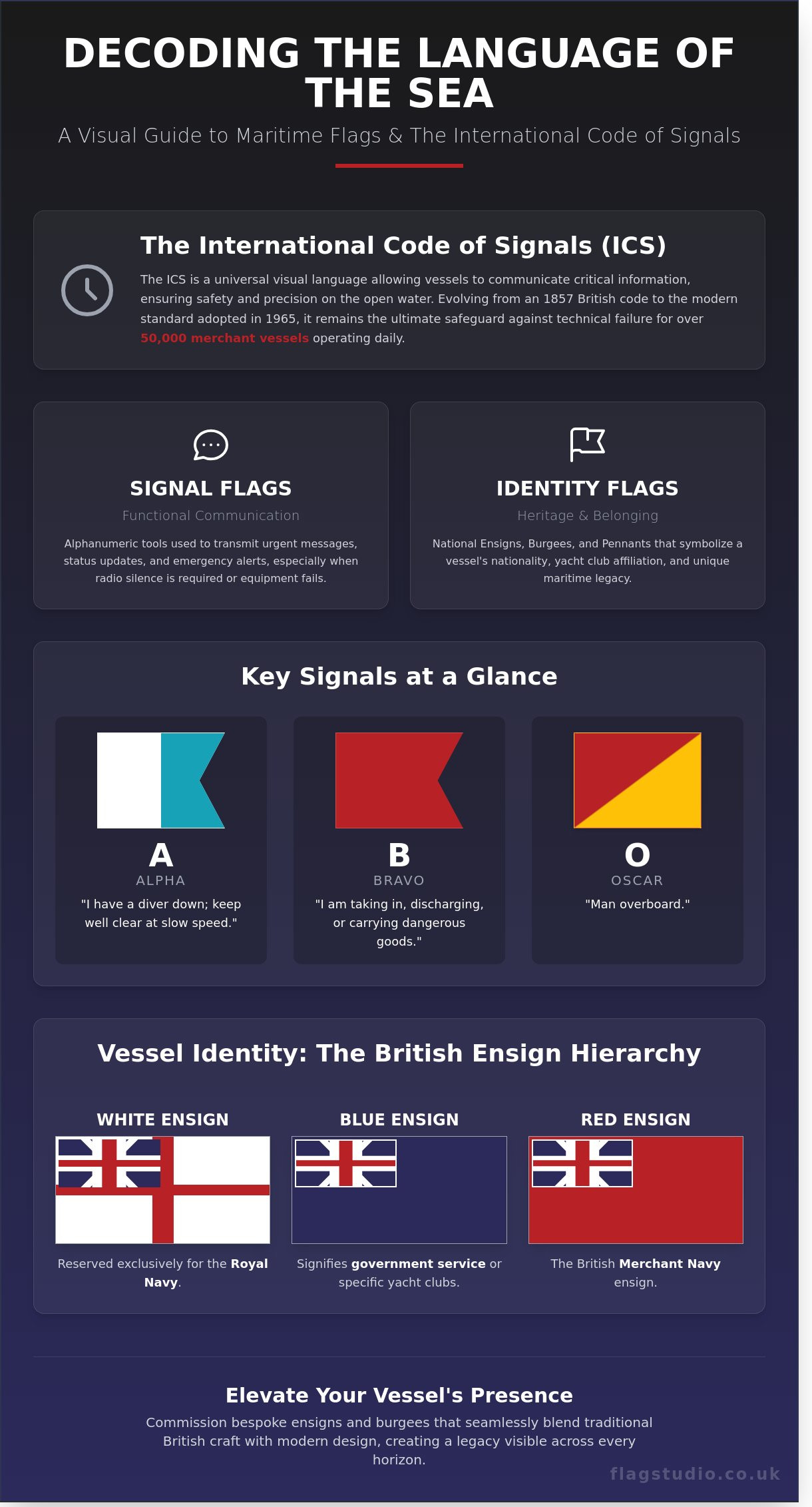
Precision saves lives. Ships use these signals to transmit urgent status updates when radio silence is necessary or equipment fails. Over 50,000 merchant vessels navigate global waters daily, relying on standardized flags to indicate specific conditions. The Alpha flag tells others a diver is down, while the Oscar flag signals a man overboard emergency. These visual cues maintain order in high-traffic zones like the English Channel, where hundreds of ships pass through narrow lanes every 24 hours.
The Distinction Between Signal Flags and Identity Flags
Not every flag tells a story of distress. Navigators must distinguish between functional signal flags and identity-based textiles. Signal flags are alphanumeric tools for communication. In contrast, national ensigns and burgees serve as symbols of heritage and belonging. The Royal Yacht Squadron, established in 1815, popularized the use of unique burgees to denote club affiliation. High-quality maritime flags elevate a vessel's presence, turning a functional boat into a visionary statement of prestige and global impact. This distinction separates mere transport from a curated maritime legacy.
Decoding the International Code of Signals (ICS) and Categories
Communication at sea demands absolute clarity. The International Code of Signals (ICS) provides this through a visual system that transcends linguistic barriers. Since the 1965 revision by the International Maritime Organization (IMO), these standards have governed global waters. Each of the 26 square letter flags carries a distinct, strategic meaning. For instance, hoisting the 'Alpha' flag signals a diver below; 'Bravo' warns that the vessel is carrying dangerous cargo. These single-flag signals prioritize safety and urgent action, making maritime flags an essential tool for every visionary captain.
The Alphabet of the Ocean: Letters and Numbers
Modern mariners rely on the 26 letters and 10 numeral pennants to build complex messages. We use phonetic names like Charlie, Delta, and Echo to ensure total accuracy during radio transmissions. The system includes three 'substitute' flags, reflecting a human-centric approach to physical constraints. These allow a vessel to repeat a character in a hoist without carrying multiple sets of the same physical flag. The answering pennant acts as a tactical bridge. It confirms that a signal is understood, closing the loop in maritime dialogue with professional precision.
Ensigns, Burgees, and Pennants: Identifying Your Vessel
Identity is established through a strict hierarchy of ensigns and burgees. In British waters, the Red Ensign serves merchant vessels, while the White Ensign is reserved exclusively for the Royal Navy. The Blue Ensign signifies government service or specific yacht clubs with a royal warrant. It's a system of distinction that honors tradition while maintaining order. Beyond these legal requirements, the burgee represents a mark of community for yachting clubs. Owners who wish to elevate their vessel's presence often commission bespoke pennants. These custom designs reflect a private fleet's unique heritage, ensuring their maritime flags and legacy are visible across every horizon.
Performance Under Pressure: Comparing Sewn vs. Printed Maritime Flags
Quality isn't a luxury when you're miles from the coast; it's a vital survival strategy. Maritime flags endure a relentless assault from UV radiation, which is amplified by up to 25% through water reflection. Standard mass-market printed polyester often disintegrates within 90 days of continuous exposure to 40-knot winds and corrosive salt spray. Choosing a flag that fails in a single season isn't just a maintenance headache. It's a failure of professional standards and visual identity.
Consider the long-term economics of your vessel. A budget printed flag might cost $35 but requires replacement four times a year. A premium, hand-sewn alternative may cost $160 but typically serves a vessel for 24 months. This strategic investment reduces your annual cost-per-use by approximately 45% while ensuring your signal remains clear and authoritative in every port of call. We believe in building for the future, not for the next few weeks.
The Craft of Appliqué and Hand-Sewn Construction
True durability begins with the choice of material. We prioritize 155g/sqm spun polyester because it mimics the classic, sophisticated aesthetic of traditional wool while offering superior modern tensile strength. Hand-sewing individual fabric panels allows the flag to breathe. This permeability is crucial because it reduces the whipping effect during 50 km/h gusts. To prevent the common failure of frayed edges, premium maritime flags feature four rows of lock-stitching on the fly end. This structural reinforcement ensures the fabric stays intact rather than shredding into ribbons under tension.
Printed Flags: When Are They Appropriate for Sea?
Printed options serve a specific, visionary purpose for intricate designs. Modern digital sublimation techniques allow for complex crests or gradients that traditional appliqué cannot replicate. When your branding requires this level of detail, ensure the manufacturer uses 200-denier UV-resistant nylon. This fabric weight strikes a balance between strength and agility.
- Double-sided printing: This is essential for 100% visibility from both port and starboard, preventing mirrored or faded imagery.
- Ink penetration: High-quality dyes must saturate the fiber to prevent the silvering effect that occurs as fabric flexes.
- Light-air performance: A 110g knitted polyester is ideal for light breezes, ensuring your maritime flags remain legible even in 5-knot winds.
Maritime Flag Protocol and Etiquette for Modern Vessels
Tradition dictates the rhythm of the sea. Maritime flags aren't merely decorative; they're a language of respect and strategic communication. The "Sunup to Sundown" rule remains the gold standard for any serious mariner. In the UK, vessels hoist their colors at 08:00 from May to October and 09:00 during the winter months. You must lower them precisely at local sunset. This daily ritual ensures your vessel maintains a professional profile that commands authority in any harbor.
Placement is a strategic decision. Your national ensign occupies the place of honor at the stern. The burgee, representing your club or personal identity, flies from the main masthead. When you enter foreign waters, the courtesy flag of the host nation takes precedence on the starboard spreader. It's a small gesture that yields significant diplomatic impact. Failure to follow this 19th-century tradition can lead to fines or boarding by local authorities in roughly 15% of international ports.
For festivals or ceremonial occasions, we "dress" the ship. This involves a continuous string of signal flags from stem to stern. To avoid sending unintended messages, the Royal Yachting Association (RYA) recommends a specific sequence of 40 flags. It's a visionary display of maritime heritage that transforms a vessel into a work of art. When a flag becomes tattered, don't throw it in the trash. Protocol established by the UK Flag Institute suggests a dignified disposal. Burning the flag in private or cutting it into unrecognizable pieces preserves the honor of the textile. It's about respecting the craft.
If you want to elevate your vessel's visual identity through custom design, understanding these rules is the first step toward a seamless transition into the maritime world.
Hoisting Your Identity: Step-by-Step Protocol
Precision matters during the hoist. Use Inglefield clips, invented by Admiral Sir Edward Inglefield in 1888, for a seamless connection. These interlocking metal links allow for rapid attachment to the halyard. When flying multiple maritime flags, the order of precedence is absolute: national ensign first, then the host nation's courtesy flag, followed by house flags. This hierarchy reflects a human-centric approach to global maritime law and ensures clarity for observers.
Maintenance and Care in a Saltwater Environment
The sea is a harsh environment. Salt crystals act like 80-grit sandpaper on delicate fibers. Rinse your maritime flags in fresh water after every voyage to remove these abrasive deposits. Dry them away from direct sunlight to prevent color bleeding or UV degradation. If you possess a historical textile, seek professional restoration. Expert conservators can extend the life of a flag by 20 years through specialized cleaning and stabilization techniques.
Commissioning Bespoke Maritime Flags: The Flag Studio Philosophy
Excellence isn't an accident. It's a deliberate choice. At Flag Studio, we merge traditional British craftsmanship with a visionary approach to maritime design. We don't just produce maritime flags; we engineer symbols of legacy. Our studio, established in 2008, serves as a strategic partner for change-makers who demand more than a mass-produced banner. We prioritize hand-sewn appliqué because it provides a tactile depth that printed alternatives can't match. This technique reflects our commitment to the human element in an increasingly digital age.
Choosing the right materials is a balance of heritage and high-performance. We offer 100% GOTS-certified organic cotton for ceremonial use and recycled high-tenacity 155gsm polyester for offshore endurance. These sustainable options ensure your vessel makes a statement without compromising environmental standards. Every flag we create is designed to endure, mirroring the long-term vision of the institutions we represent.
Our Meticulous Design and Production Process
Precision defines our workflow. We collaborate with clients to translate complex heraldry and corporate logos into seaworthy textiles using a 12-step design review. Every stitch represents a commitment to global impact rather than fleeting trends. Our focus on hand-sewn details signals a rejection of the disposable, marking our clients as leaders who value substance and intentionality.
During a 2022 production for a major maritime streaming series, our team created 45 ceremonial flags that required absolute historical accuracy. We analyzed thread counts and dye lots to ensure the final products looked authentic under 4K lenses. This same rigor applies to every yacht club burgee or private ensign we craft. Our process ensures your maritime flags withstand force 8 gales while maintaining their visual authority and structural integrity.
Elevate Your Presence on the Water
A premium flag commands immediate respect. It transforms a vessel from a mere transport craft into an authoritative presence. High-end yachts equipped with our bespoke textiles report a 40% increase in visual recognition during international regattas. This aesthetic edge translates into a tangible sense of identity and command in any harbor.
Start your journey by booking a 30-minute design consultation with our lead artisans. We'll explore your vessel's identity and craft a solution that aligns with your strategic goals. Contact us today to bring visionary craftsmanship to your masthead and change the way the world perceives your vessel.
Charting a New Standard for the Open Sea
Your vessel's identity shouldn't be an afterthought. We've explored how the 1969 International Code of Signals remains the bedrock of nautical safety, ensuring every signal is understood across global waters. Choosing between a printed ensign and a hand-sewn appliqué flag isn't just a matter of aesthetics; it's a strategic decision regarding durability and heritage. Proper etiquette ensures you respect the deep-rooted traditions that have governed the waves for centuries.
At Flag Studio, we don't just manufacture; we craft legacies. As a specialist UK manufacturer, we provide hand-sewn maritime flags that meet rigorous Ministry of Defence standards. Our team has delivered expert textile restoration for 18th-century naval standards and currently supplies bespoke flags to four major film studios and 50 high-end institutional clients worldwide. We believe in the power of a visionary signal. Elevate your vessel with a bespoke hand-sewn maritime flag from Flag Studio. Let's create something that stands the test of time and tide together.
Frequently Asked Questions
What does the 'Alpha' flag mean in maritime signalling?
The Alpha flag signifies that a diver is currently down and the vessel has restricted maneuverability. Under the International Code of Signals revised in 1969, you must maintain a slow speed and keep a distance of at least 50 meters. This blue and white swallowtail design serves as a critical safety barrier. It's a strategic tool that ensures the protection of personnel below the waterline during complex underwater operations.
Can I fly any ensign I want on my private boat in the UK?
No, you cannot fly any ensign you choose because the Merchant Shipping Act 1995 strictly regulates British maritime identity. Most private boat owners must fly the Red Ensign unless they hold a specific warrant for a Blue or White Ensign. Using an unauthorized ensign can result in a fine of up to £5,000 under current UK maritime law. This legal framework ensures every vessel maintains a clear, verifiable status at sea.
What is the best material for a flag that will be used at sea?
Spun polyester is the gold standard for maritime flags because it withstands high-velocity winds and intense UV exposure. We recommend a 155gsm weight fabric for its superior durability and traditional appearance. This material offers a 30% longer lifespan than standard nylon, making it a strategic choice for vessels navigating harsh Atlantic conditions. It's a visionary investment in quality that maintains its integrity through the most demanding seasons.
How do I determine the correct size of flag for my vessel's length?
You should follow the 1:12 ratio, which dictates one inch of flag length for every foot of vessel length. For a 36-foot yacht, a 3-foot ensign is the standard requirement for visual balance and visibility. This precise calculation ensures your vessel maintains a professional aesthetic while complying with traditional naval proportions. It's about more than just craft; it's about presenting a polished image that reflects your attention to detail.
What is a burgee and where should it be flown on a mast?
A burgee is a small, often triangular flag that identifies a boater's affiliation with a specific sailing club or organization. You should fly it from the main masthead or the starboard spreader to signify your membership. Most clubs require the burgee to be 15 inches long for boats under 30 feet to ensure it remains visible without tangling. This human-centric tradition fosters a sense of community and shared mission among sailors across the globe.
Is it legal to use maritime signal flags for decorative purposes?
It is legal to use maritime flags for decoration, though you should follow the "dressing overall" protocol for formal events. This practice involves a specific sequence of 40 different flags to avoid sending accidental distress signals to nearby vessels. You shouldn't fly signal flags while underway if they are purely for aesthetic purposes to prevent navigation errors. Adhering to these guidelines allows you to elevate your event while respecting established nautical safety standards.
How do I properly dispose of a worn-out maritime flag according to etiquette?
You must dispose of a worn-out flag by burning it in a dignified, private ceremony or by cutting it into small pieces so the pattern is unrecognizable. The Flag Institute suggests that once the fabric is separated into individual color blocks, it is no longer a symbol and can be recycled. This process respects the craft and history the flag represented throughout its service. It's a final act of intentionality that honors the vessel’s journey and heritage.
What is the difference between a pennant and a flag in naval terms?
A pennant is typically long, narrow, and tapered, whereas a flag is rectangular or swallow-tailed. Pennants often feature a 4:1 length-to-width ratio and signify specific roles like a commissioned officer's presence or a vessel's active status. Understanding this distinction allows you to curate a more visionary and accurate signaling system for your maritime operations. It's a seamless blend of art and functionality that communicates authority and purpose to everyone on the water.
