



A Guide to Union Flag Fabric Materials and Weaves
Choosing the right fabric for a Union flag isn't a one-size-fits-all decision. It's really about matching the material to its mission. The best fabric for a ceremonial flag hanging peacefully indoors will be entirely different from one designed to withstand a gale on a coastal flagpole.
Choosing the right flag fabric
Think of it like picking the right coat for the weather. You wouldn't grab a thin windbreaker for a blizzard, and a heavy-duty winter parka would be ridiculous on a mild spring day. The same common sense applies to flags; the environment is the single biggest factor in choosing the right material.
This guide will walk you through the main textiles we use to craft high-quality Union flags. We’ll look at the pros and cons of the most common options, including:
- Traditional Woven Polyester: The go-to choice for durability and official use.
- Versatile Knitted Polyester: A fantastic all-rounder, especially good at catching a light breeze.
- Classic Cotton: Nothing beats it for that rich, traditional look in a ceremonial setting.
We’ll break down how each one performs, looks, and holds up over time. Getting the fabric right from the start is the most important step in ensuring your flag not only looks the part but also lasts, whether it’s flying proudly from a public building, a private home, or a vessel at sea.
When it comes to choosing the right fabric for a Union Flag, you're generally looking at two or three main contenders, but here in the UK, polyester is king. It’s the go-to material, but it comes in a couple of different flavours, each with its own job to do.
Woven vs. Knitted Polyester
Think of woven polyester as the heavyweight champion of the flag world. It's a seriously tough, durable material with a classic, traditional matt finish. This is what you want for a flag that's going to be flying from a flagpole day in, day out, battling the British weather.
In fact, the gold standard used by many UK flag makers is a premium 155 gsm (grams per square metre) woven polyester, the very same specification approved by the Ministry of Defence. For these top-tier flags, each of the 31 individual panels is meticulously hand-sewn together to create a flag that’s built to last.
Then you have knitted polyester, its lighter, more agile sibling. This fabric is specifically designed to catch the wind, allowing the flag to fly beautifully even in the slightest of breezes. It’s perfect for creating a bit of movement and life when the wind isn't howling.
This infographic breaks down the choice in a really simple way, helping you pick the right material for your needs.
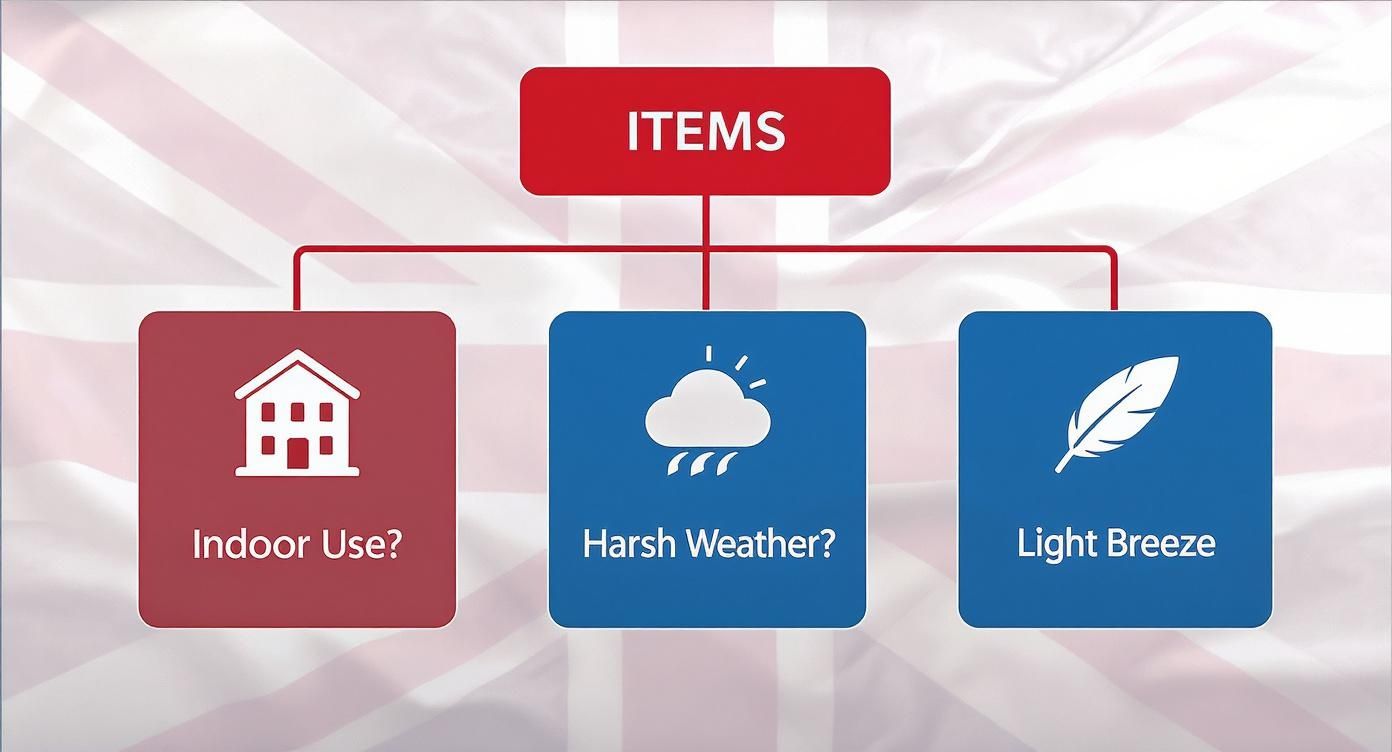
As you can see, it all comes down to where your flag will live. The environment dictates whether you need the sheer toughness of woven polyester or the lighter, more graceful flight of a knitted fabric. You can get a closer look at the specific fabrics we use in our workshop for a better feel of the quality.
Quick Comparison of Flag Materials
To make things even clearer, here’s a quick-glance table comparing the most common fibres you'll encounter for Union Flags, along with some others you might see.
Union Flag Fabric Material Comparison
| Fibre Type | Primary Use Case | Key Advantage | Main Disadvantage |
|---|---|---|---|
| Woven Polyester | Outdoor, high-wind areas, ceremonial | Extreme durability, traditional look | Heavy; needs strong wind to fly well |
| Knitted Polyester | Indoor, light-wind areas, events | Flies easily, vibrant print quality | Less durable in harsh weather |
| Nylon | Marine, all-weather outdoor use | Lightweight, strong, quick-drying | Can fade faster under intense UV |
| Cotton | Ceremonial, indoor display | Rich, deep colours, historic feel | Prone to rot and mildew if wet |
This table really highlights the trade-offs. While cotton has that authentic, historic look, modern polyesters offer a far better balance of performance and longevity for almost every situation. For further reading on fabric choices, you can find some great insights on the materials used for academic wear, which shares some similar principles of durability and appearance.
Understanding Fabric Weaves and Weights
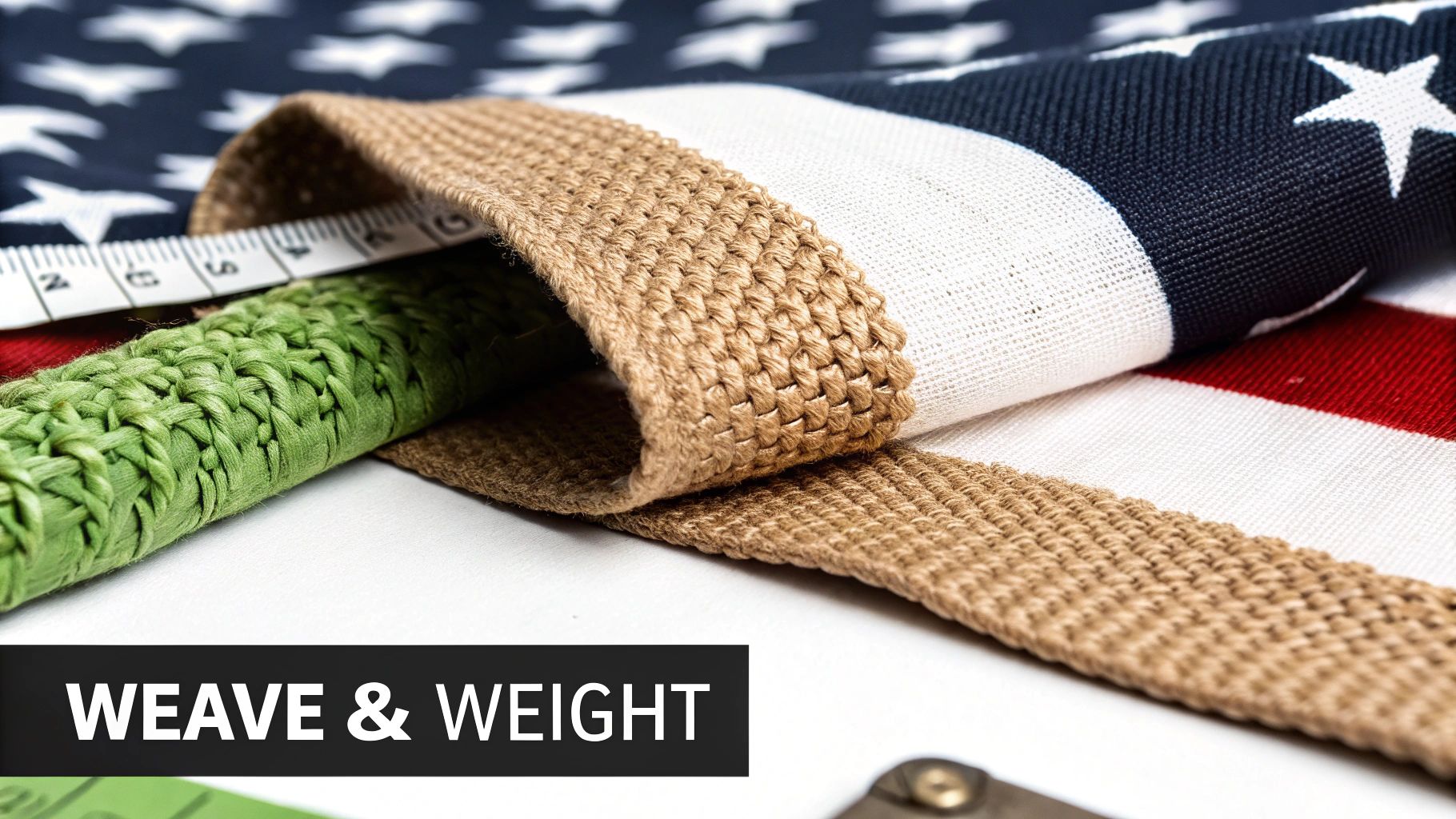
It’s not just the fibre that matters; how that fibre is woven into a union flag fabric is what truly dictates how it will behave out in the real world. The two biggest factors here are the weave and the weight, and getting them right is the secret to a flag that lasts.
The most common way we measure this is in GSM, which stands for grams per square metre. Think of it as the fabric's density. A higher GSM, like the 155gsm you’ll find in our woven polyester, gives you a heavier, tougher flag that feels reassuringly solid in your hands. This is a world away from the lighter knitted polyesters which are designed to catch the slightest breeze.
Of course, for official government use, these things are specified down to the last detail. The UK/SC/4767 standard, for instance, lays out exactly what’s required. To get a better feel for this, this guide on understanding the weights of fabric is a great resource that explains how weight impacts everything from durability to the way the flag hangs.
These official standards are incredibly precise, calling for a strong plain weave made from semi-dull polyester yarns. This isn't just a suggestion—it's a requirement to make sure every flag performs exactly as it should, looking its best and lasting for years. It’s this meticulous attention to detail that sets a proper flag apart.
Sewn Versus Printed Flag Construction
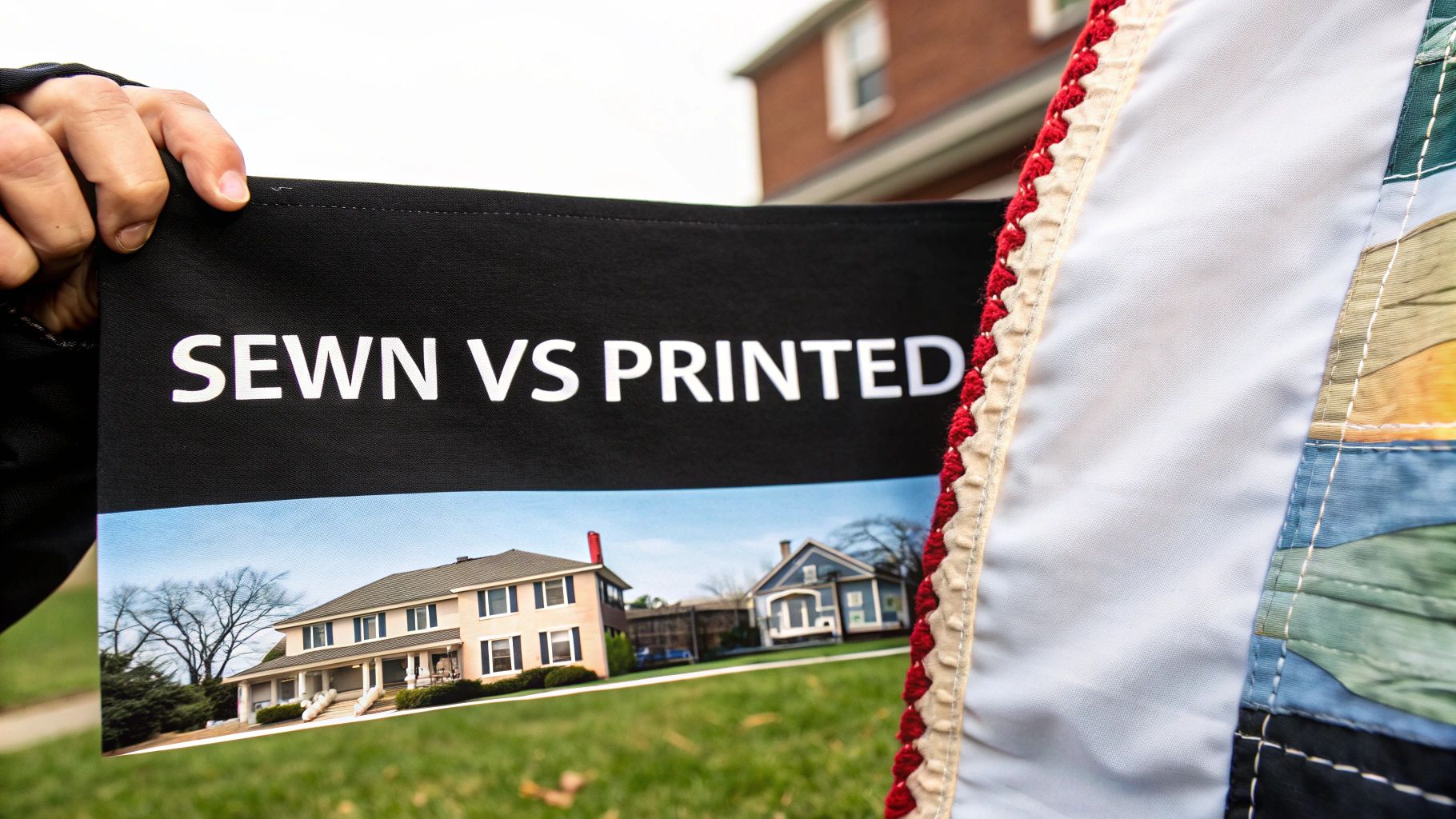
The choice of union flag fabric is only half the story. How the flag is actually put together plays a massive role in its final look, feel, and how long it will last. You're generally looking at two distinct methods: the traditional sewn approach and the modern printed one. Each has its place, and the right one for you depends entirely on what you need your flag for.
A traditional sewn flag, sometimes called an appliquéd flag, is a true piece of craftsmanship. Think of it like a bespoke suit. We take individual pieces of coloured fabric, cut them precisely to shape, and then skilfully stitch them all together. The result is a premium, textured flag with deep, vibrant colours that are woven right in, not just sitting on the surface. This robust construction makes it the go-to choice for official buildings, military ceremonies, and anyone wanting a flag with real heritage and presence.
On the other hand, you have printed flags. These are generally lighter on the fabric and lighter on your wallet. Using advanced dye-sublimation printing, we infuse the ink directly into the fibres of the material. This creates incredibly sharp, detailed images, making it perfect for intricate crests or complex logos. Because the flag is a single piece of cloth, it's often better suited for occasional flying or indoor displays where it won't be battling the elements day in, day out.
Getting to grips with the key differences between whether to print or stitch your flag is the first step in making a confident choice.
Essential Finishes for Durability and Safety
The raw union flag fabric is only half the story. It's the finishing touches that truly get a flag ready for its job, whether it's flying proudly outdoors or hanging with dignity inside. Think of these treatments as the flag's armour, protecting it from the elements and making sure it's safe for public display.
Protecting Against the Elements
For any flag destined for the outdoors, a UV-resistant coating is non-negotiable. It's essentially sunscreen for the fabric, shielding those iconic reds and blues from the relentless bleaching effect of the sun. Without it, you'd see noticeable fading in just a few months.
Meeting Safety Standards
If your flag is going to be displayed indoors in a public building, a fire-retardant treatment is often a legal must-have. This is a critical safety measure that ensures the material complies with strict regulations, giving everyone peace of mind.
The Importance of a Strong Construction
Physical strength is just as crucial. A tough, reinforced headband with a sturdy rope and toggle is the anchor that keeps the flag secure. We also triple-stitch the fly edge—the side that flaps in the wind—to dramatically reduce the chances of it fraying over time.
For a deeper dive into all the options, from grommets to special hems, take a look at our complete guide to flag finishes and reinforcements.
Looking After Your Union Flag
A well-made Union Flag is an investment, and like any quality item, it needs a bit of care to stay looking sharp. A simple maintenance routine can make all the difference, preserving its bold colours and extending its lifespan for years to come.
For most modern polyester flags, a gentle, cool machine wash with a mild detergent is perfectly fine. But if you have a traditional cotton or an intricately appliquéd flag, it's best to leave it to the professionals—specialist dry cleaning will protect the fabric's structure and vibrant dyes.
After washing, always let your flag air dry completely. Never pack it away damp.
How you store your flag is just as important. Take the time to fold it neatly—never just scrunch it up—and find a dry, well-ventilated spot for it. This simple step prevents mildew and stops deep, stubborn creases from setting in.
If you spot minor wear and tear, like a fraying hem, a few quick stitches can stop a small problem from turning into a major rip. When your flag eventually becomes too worn to be flown with pride, it deserves a respectful retirement. This is often done through a ceremonial burning or by returning it to a dedicated flag maker.
Your Union Flag Fabric Questions Answered
Choosing the right fabric for a Union Flag can feel surprisingly complex. To help you make a confident choice, we've gathered some of the most common questions we hear and answered them in plain English.
Article created using Outrank
