

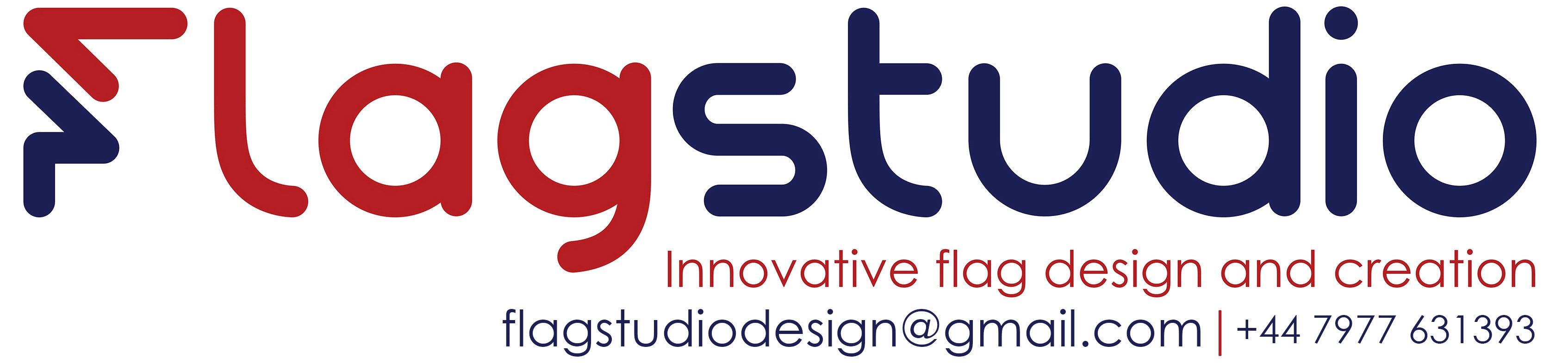

Promotional Banners Guide: Strategies for 2025 Success
Promotional banners are transforming how brands connect with audiences in today’s fast-paced marketing world. As digital and physical spaces blur, their impact becomes even more significant. This guide delivers practical strategies to help you design, deploy, and optimise promotional banners for success in 2025. Explore the latest trends, essential design principles, digital versus physical options, sustainability considerations, and how to measure impact. Want proven tactics and expert tips to stay ahead? Read on and discover how to maximise your banner campaigns in the year ahead.
The Evolving Landscape of Promotional Banners in 2025
The world of promotional banners is undergoing a rapid transformation as we approach 2025. Businesses are rethinking how they design, deploy, and measure their banners, driven by evolving consumer preferences and technological advancements. To remain competitive, brands must adapt their promotional banners to fit new marketing realities and capitalise on the latest trends.
Shifting Marketing Trends and Consumer Behaviour
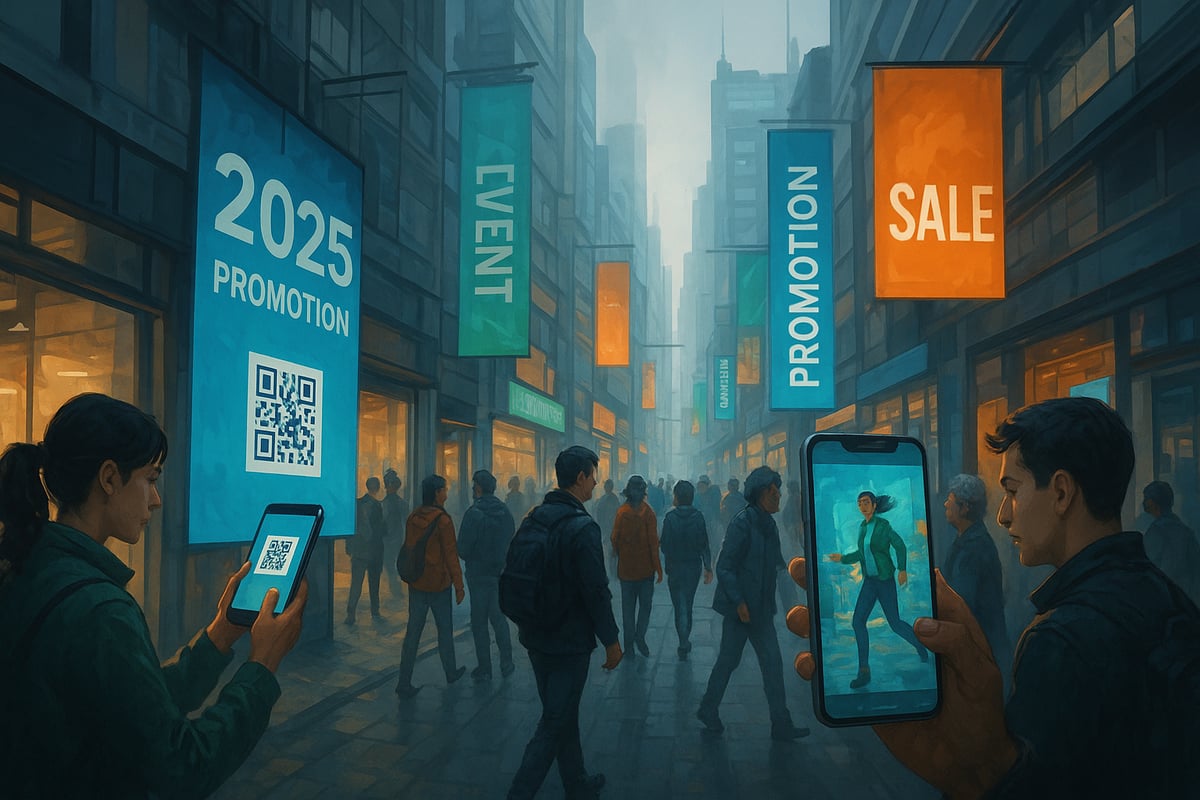
Omnichannel marketing is changing how businesses use promotional banners. Brands now coordinate banners across physical and digital channels, creating a seamless experience for customers. Consumers expect personalisation and relevance, prompting companies to tailor their promotional banners using data-driven insights.
Hybrid events and digital experiences are also shaping banner strategy. Retailers, for example, deploy banners both in-store and online to craft cohesive campaigns that boost engagement. Industry reports reveal that 72% of consumers are more likely to engage with personalised promotional materials, highlighting the growing importance of targeted messaging.
Digital vs. Physical Banners: Where Do They Stand?
The adoption of digital promotional banners is on the rise, especially for online campaigns where interactivity and real-time updates are crucial. Yet, physical banners remain vital at trade shows, events, and retail locations, offering tactile engagement that digital formats cannot replicate.
Many leading brands are discovering that combining both digital and physical promotional banners yields higher returns on investment. For instance, a retailer may use eye-catching physical banners at entrances, supported by digital banners online to reinforce the same message. This dual approach ensures maximum reach and impact.
| Format | Strengths | Best Use Cases |
|---|---|---|
| Digital | Interactivity, analytics | Online campaigns, hybrid events |
| Physical | Tactile, durable | Trade shows, retail, outdoor |
Key Innovations Driving Banner Effectiveness
New technologies are transforming promotional banners into interactive and immersive tools. Augmented reality (AR) and virtual reality (VR) are now used to create engaging experiences, allowing potential customers to visualise products or interact with branded content directly through banners.
Smart banners equipped with QR codes and NFC enable seamless connections between physical and digital experiences. Dynamic content, which adapts based on audience data or event context, is increasingly popular. For example, event organisers use digital screens for banners that display real-time updates, ensuring messages stay relevant throughout an event.
Regulatory and Accessibility Considerations
Stricter advertising regulations are influencing how companies design and place promotional banners. Compliance with guidelines on font size, colour contrast, and readability is now essential, not just for aesthetics but for accessibility.
Digital banners must also observe GDPR and data privacy rules, especially when tracking user engagement. To stay compliant, brands should follow practical tips such as using legible fonts, maintaining high contrast, and providing accessible versions of digital promotional banners. Regularly reviewing legal requirements ensures banners meet both regulatory and ethical standards.
Sustainability and Eco-Friendly Materials
Sustainability is a top priority for businesses investing in promotional banners. The demand for banners made from recycled or biodegradable materials is growing rapidly. Many brands now incorporate sustainability messaging within their promotional banners to appeal to eco-conscious consumers.
According to recent data, 65% of UK businesses plan to adopt eco-friendly banners by 2025. Common sustainable choices include PVC-free fabrics and water-based inks. For more details on responsible sourcing and production, see the Eco-friendly banner materials policy.
The Role of Banners in Integrated Campaigns
Promotional banners are increasingly recognised as key components of integrated marketing strategies. They support broader campaigns by reinforcing messages across events, digital platforms, and social channels.
Consistency in design and messaging is crucial for strong brand recall. By aligning promotional banners with other marketing materials, brands ensure their campaigns are memorable and cohesive, maximising the impact at every customer touchpoint.
Designing Promotional Banners That Stand Out
In a crowded marketplace, promotional banners must do more than just catch the eye. They need to deliver a message quickly, reflect your brand, and drive action. As visual competition intensifies in 2025, the right approach to design is essential for making your promotional banners truly memorable.
Core Design Principles for 2025
Effective promotional banners begin with clarity. Keep your message concise, focusing on a single, compelling call-to-action. Simplicity in design ensures your banner is readable at a glance, while a strong visual hierarchy leads the viewer’s eye to the most important information.
Brand consistency is another pillar. Use your logo, colour palette, and fonts consistently to reinforce recognition. According to industry data, banners with succinct messaging convert 30% better than those overloaded with information.
For more in-depth advice on layout, imagery, and file preparation, explore these Banner design and artwork tips.
Colour, Typography, and Visual Impact
Colour plays a vital role in how promotional banners are perceived. Choose hues that evoke the desired emotion—blues for trust, reds for urgency, or greens for eco-consciousness. High-contrast colour schemes ensure your text stands out against the background, improving visibility from a distance.
Typography should be chosen with legibility in mind. Sans-serif fonts are often preferred for their clarity, especially at larger sizes. Avoid clutter by limiting the number of typefaces and opt for bold, easy-to-read styles.
Strategic use of imagery and icons can further enhance impact, drawing attention to your message and reinforcing your brand’s identity.
Personalisation and Audience Targeting
Tailoring promotional banners to your audience is now more achievable than ever. Leverage customer data to create banners that speak directly to specific demographics or locations. For example, a banner at a local sporting event can feature team colours or regional references.
Variable data printing enables you to personalise physical banners at scale, making each installation relevant to its setting. This targeted approach increases engagement and ensures your promotional banners resonate with viewers.
Audience-focused design helps build stronger connections and can significantly boost conversion rates when executed thoughtfully.
Incorporating Interactive and Dynamic Elements
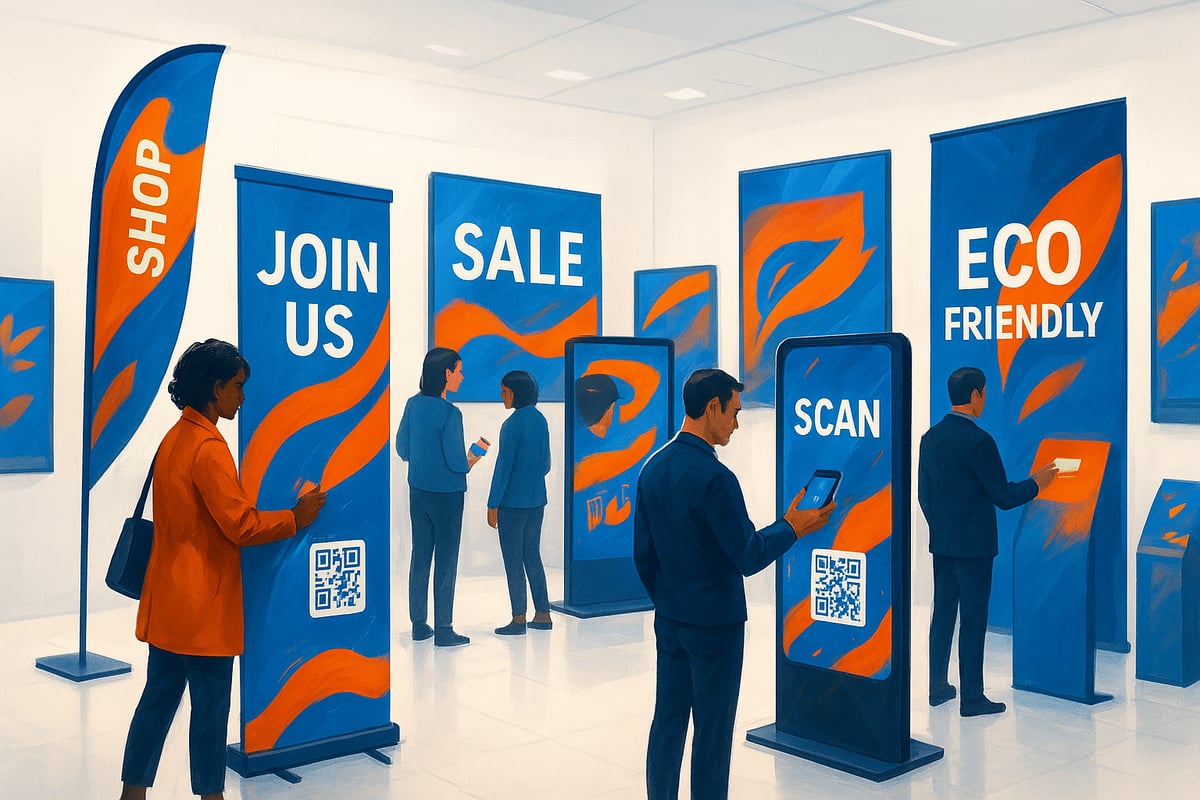
Modern promotional banners are no longer static. Integrate QR codes or NFC tags to bridge the gap between the physical and digital worlds, allowing customers to access more information or special offers instantly. Augmented reality features can create immersive experiences that leave a lasting impression.
Digital banners benefit from animated graphics and real-time content updates, such as event schedules or flash promotions. At recent events, banners with interactive QR codes have driven more app downloads and social engagement, demonstrating the power of dynamic features.
Consider which interactive tools best align with your campaign goals and audience preferences.
Accessibility and Inclusivity in Design
Designing promotional banners for everyone is essential. Use large, legible fonts and maintain strong contrast between text and background. This not only aids those with visual impairments but also improves readability for all viewers.
Accessibility standards should be met, especially for banners in public spaces. In some cases, tactile elements or braille can be integrated, ensuring inclusivity and compliance with regulations.
Prioritising accessibility in your promotional banners demonstrates social responsibility and can expand your reach to a broader audience.
Testing and Iteration: From Mock-up to Final Product
Before full-scale production, test your promotional banners through mock-ups and A/B trials. Gather feedback from colleagues, focus groups, or a pilot audience to identify areas for improvement. Use performance data—such as engagement rates or observed foot traffic—to guide adjustments.
A structured approach to testing might include:
| Stage | Method | Key Focus |
|---|---|---|
| Mock-up | Visual review | Readability, CTA |
| A/B Testing | Variant trials | Engagement |
| Live Feedback | User responses | Clarity, appeal |
Iterative refinement ensures your promotional banners achieve their intended impact and adapt to changing trends.
Choosing the Right Banner Type and Material
Selecting the ideal promotional banners is essential for achieving your marketing goals in 2025. With so many options available, understanding the differences in banner types, materials, sizing, customisation, and supplier expertise can help you make informed decisions that boost brand visibility and campaign results.
Overview of Popular Banner Types
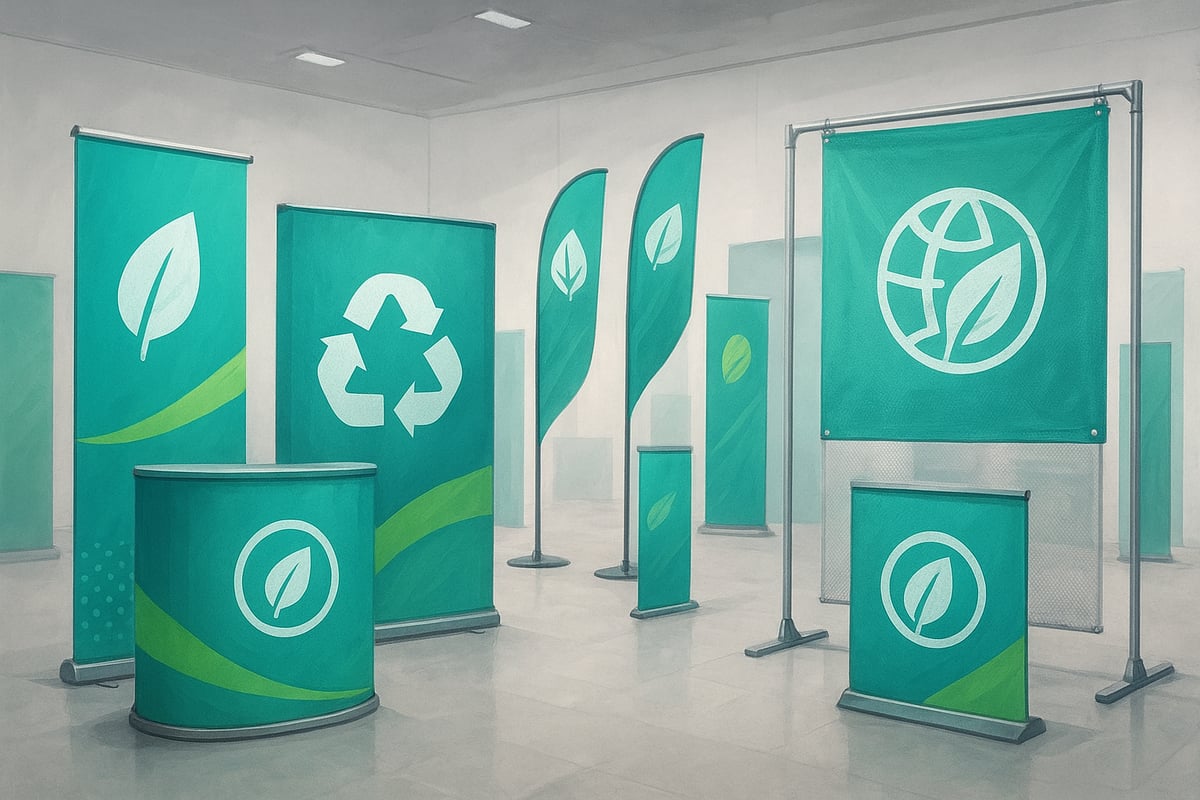
When choosing promotional banners, consider the wide range of formats designed for specific environments and objectives. Roll-up banners are ideal for compact spaces and quick setups, making them popular at exhibitions. Pop-up displays deliver larger visual impact, perfect for trade shows and product launches.
Feather flags stand out for outdoor events and roadside promotions due to their height and movement in the wind. For more details, see Feather flags for promotions. Mesh banners excel in windy outdoor conditions, allowing air to pass through without compromising visibility. Selecting the right type ensures your message reaches the right audience in any setting.
Material Selection: Durability, Sustainability, and Cost
Material choice directly affects the performance and sustainability of your promotional banners. PVC remains a common choice for durability and vibrant print quality, while polyester offers lightweight flexibility for transport and storage. Eco-fabrics and canvas are gaining traction, appealing to brands with a focus on environmental responsibility.
| Material | Durability | Sustainability | Cost |
|---|---|---|---|
| PVC | High | Low | Moderate |
| Polyester | Medium | Medium | Low |
| Eco-fabrics | Medium | High | High |
| Canvas | Medium | High | High |
Today, eco-friendly promotional banners account for around 40% of UK orders. Making a conscious material choice can help align your brand with current consumer expectations.
Sizing and Placement Considerations
The effectiveness of promotional banners is closely tied to their size and strategic placement. Selecting the right dimensions ensures your messaging is visible from the intended viewing distance, whether in a busy shopping centre or a large exhibition hall.
For maximum impact, consider these placement tips:
- Position banners at entrances to capture footfall.
- Use eye-level displays for direct engagement.
- Place large-format banners in open areas for broader visibility.
For outdoor or high-traffic locations, mesh banners and feather flags offer superb performance, maintaining visibility even in challenging conditions.
Customisation Options and Branding Opportunities
Personalisation is key to making promotional banners stand out. Double-sided printing allows your message to be seen from multiple directions, while custom shapes can align banners with your brand identity. Integrated lighting adds visual appeal, especially in dimmer environments.
Popular customisation features include:
- Unique banner contours and die-cut shapes
- Bespoke graphics tailored to campaigns
- Illuminated elements for evening events
Retailers often see increased footfall and engagement when investing in bespoke banner designs that reflect brand values and campaign themes.
Working with Professional Banner Providers
Partnering with a reputable supplier is crucial for quality assurance and campaign success. Professional providers guide you through artwork preparation, offer proofing services, and ensure your promotional banners meet deadlines.
Look for suppliers who:
- Offer UK-based manufacturing for faster delivery
- Provide flexible order quantities and rapid lead times
- Support you with expert design and technical advice
Choosing the right partner guarantees your promotional banners are produced to the highest standard and delivered on time for your next campaign.
Strategic Deployment: Where and How to Use Promotional Banners
Strategically deploying promotional banners is crucial for capturing attention and driving engagement in diverse settings. From bustling trade shows to digital campaigns, effective placement and integration can amplify your brand’s message and boost results.
Maximising Impact at Events and Trade Shows
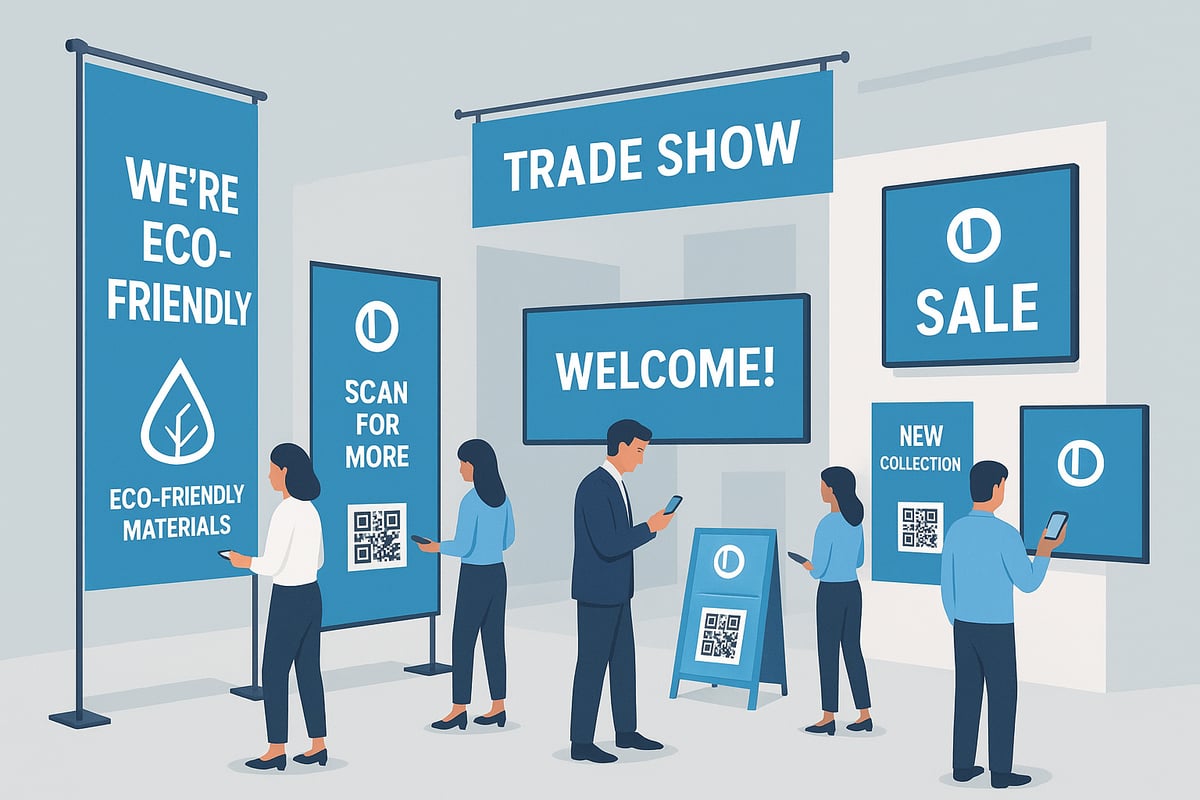
Events and trade shows are prime locations for promotional banners, offering high footfall and brand exposure. Position banners at entrances to catch attendees immediately. Use large, visually striking designs that reflect your brand’s identity.
Integrate banners with interactive displays or competitions to increase dwell time. Consider using your promotional banners as stylish photo backdrops, encouraging visitors to share branded images on social media. This not only boosts engagement but also extends your reach beyond the event floor.
For best results, coordinate banner themes with giveaways or digital elements, ensuring a cohesive and memorable experience throughout the event.
In-Store and On-Site Applications
In-store promotional banners can drive immediate action, guiding shoppers towards special offers or new products. Place banners at eye level in high-traffic zones, near entrances, or at key decision points.
Seasonal campaigns benefit from flexible banner systems that are easy to update. Use bold calls to action and concise messaging to prompt purchases. Studies show that well-placed promotional banners can boost impulse buying by up to 20 percent.
Wayfinding banners also enhance customer experience, making navigation simpler and reinforcing brand presence at every touchpoint.
Outdoor and Large-Scale Installations
Deploying promotional banners outdoors requires attention to durability and compliance. Choose weatherproof materials and secure fixings to withstand wind and rain. Mesh banners are ideal for open-air environments, allowing air flow without compromising visibility.
Large-scale banners at festivals or public events maximise sponsor exposure. As sustainability gains importance, outdoor promotional banners made from recycled or biodegradable materials are increasingly popular. According to eco-friendly promotional products market statistics, demand for sustainable options continues to rise, reflecting consumer expectations.
Always check local regulations to ensure your banners meet public display standards and safety requirements.
Digital Banner Deployment: Online and Hybrid Campaigns
Digital deployment of promotional banners offers precision and flexibility. Programmatic ads allow for targeted messaging, while retargeting keeps your brand top of mind for interested audiences.
Hybrid campaigns, combining both physical and digital promotional banners, create seamless customer journeys. For example, integrating QR codes on physical banners can link users directly to online offers or event apps, bridging offline and online engagement.
Consistency in creative and messaging across channels is essential for strong brand recall and campaign effectiveness.
Measuring Success: KPIs and Analytics
To gauge the effectiveness of promotional banners, track key performance indicators such as impressions, engagement rates, and conversions. Use analytics tools for digital banners to monitor click-throughs and user interaction.
For physical banners, measure footfall, sales uplift, or coupon redemptions linked to specific campaigns. Gathering data enables you to refine future deployments and optimise ROI.
Regularly review your KPIs and adjust strategies accordingly, ensuring your promotional banners continue to deliver measurable impact.
Future-Proofing Your Promotional Banner Strategy for 2025 and Beyond
Staying ahead in the world of promotional banners means anticipating change and embracing innovations. As marketing channels evolve, successful brands adapt their banner strategies to remain relevant and effective. Here is how you can future-proof your promotional banners for 2025 and beyond.
Embracing Technology and Innovation
The future of promotional banners is driven by technology. Brands are adopting AR and VR features to create immersive experiences that go beyond static displays. Smart banners, powered by IoT, can adapt content in real time based on audience data and event context.
For example, banners at large conferences can deliver targeted messages to different attendee groups. AI-driven personalisation further enhances engagement, ensuring each viewer sees relevant offers or information. Integrating these technologies into promotional banners not only boosts interactivity but also provides valuable data for ongoing optimisation.
Sustainability as a Core Value
Sustainability is now central to the conversation around promotional banners. UK businesses are rapidly shifting towards recyclable and biodegradable materials, recognising the importance of eco-friendly practices. Research shows that 78% of UK consumers prefer brands that are visibly committed to sustainability.
Brands are not only investing in greener materials but are also communicating their environmental credentials through banner campaigns. For practical insights into how sustainability is shaping the UK business market, refer to Sustainability in the UK business market. By aligning banner strategies with consumer values, companies can build trust and stand out in a crowded market.
Building Agility into Banner Campaigns
Agility is essential for modern promotional banners. Rapid production and deployment allow brands to seize time-sensitive opportunities, such as flash sales or trending events. Modular banner systems make it easy to update messaging or graphics without a full redesign.
Case studies show that agile brands can pivot quickly, responding to changes in market conditions or public sentiment. By building flexibility into their approach, businesses ensure their promotional banners remain relevant and impactful, whatever the circumstances.
Integrating Banners with Broader Marketing Ecosystems
Promotional banners are most powerful when integrated into a wider marketing ecosystem. Syncing banners with digital, social, and experiential campaigns amplifies messaging and ensures consistency across all channels.
For instance, banners can be cross-promoted in email campaigns or featured in social media posts. This approach strengthens brand recognition and drives higher engagement. Coordinating physical and digital banners creates a seamless experience, maximising the reach and effectiveness of every campaign.
Preparing for Regulatory and Market Changes
The landscape for promotional banners is shaped by evolving regulations and shifting consumer expectations. Staying informed about changes in advertising standards and accessibility laws is crucial for compliance.
Brands must also monitor trends in privacy, such as GDPR, and adapt their digital tracking methods accordingly. Practical steps include regular audits and ongoing staff training. By remaining proactive, companies can ensure their promotional banners not only meet legal requirements but also lead the way in innovation and responsibility.
As you look ahead to making your promotional banners work harder in 2025, the strategies and insights we’ve covered set you up for real impact—from choosing eco-friendly materials to blending digital innovation with hands on design. Whether you’re planning a bespoke campaign or need banners that reflect your brand’s values and ambitions, it pays to partner with UK experts who truly understand quality and versatility. If you’re ready to elevate your next project and see what’s possible with custom banners made right here in the UK, why not ask us What can we make for you today?
